
Biology and ecology
Understanding the biology and ecology of any fishery species is needed to evaluate its response to exploitation, and to inform effective management.
Despite significant previous research into the biology of Snapper in southern Australia, there remain multiple knowledge gaps. These include:
- the factors that influence juvenile recruitment
- the processes that maintain their populations
- how Snapper is influenced by changing environmental conditions.
Projects
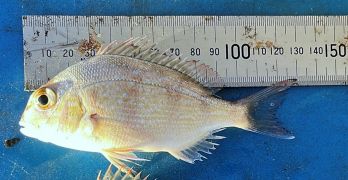
Recruitment variability & climate change
Monitoring biological factors affecting juvenile Snapper in SA’s gulfs and studying the relationships between recruitment and potential environmental influences.
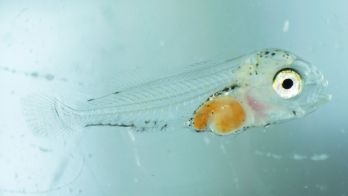
Demographic processes & stock structure
Understanding local spawning, recruitment, and emigration contributing to the West Coast Snapper population, to improve fisheries management.
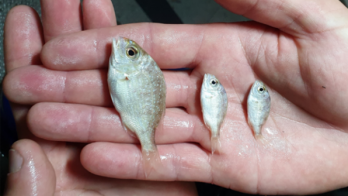
Review of biological parameters
Investigating possible changes in length and age, growth rates, and maturity size of Snapper in SA to inform stock assessment models.
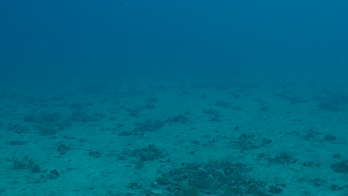
Benthic habitat survey in Gulf St Vincent
Quantifying the abundance of seafloor habitats to understand movement patterns affecting recruitment, and to locate Snapper at different life stages.
Funding and partners
This work is co-funded by the Fisheries Research and Development Corporation (FRDC) and the Government of South Australia.
SARDI collaborates with the following research partners for these projects:
- The University of Adelaide
- Flinders University
- Victorian Fisheries Authority
- Government of Western Australia – Department of Primary Industries and Regional Development
- Marine Fishers Association.