

PestFacts 10 September 2024
Control next year's redlegged earth mite now
Redlegged earth mite (RLEM, Halotydeus destructor) is a common resident pest. RLEM are active from autumn to late spring and have up to 3 generations each year. The final or third generation produces over-summering eggs that will hatch the following autumn.
Controlling RLEM before the over-summering eggs are laid is an effective way of reducing next year's population. You can use the Timerite calculator to find the optimal spray dates for your property.
As RLEM are becoming increasingly resistant to many pesticides, it is important to spray only if your risk is high.
How to determine your risk
Use the redlegged earth mite best management practice guide from the Grains Research and Development Corporation (GRDC) to evaluate the risk of RLEM on your property based on:
- previous crops
- observation of mites in spring
- sensitivity of the future crops.
Alternatively, you can use the interactive RLEM severity risk assessment developed by Cesar Australia.
Ensure that you correctly identify the mites you find as the Timerite calculator only works on RLEM.
Identifying RLEM
RLEM are up to 1 millimetre in length, with globular-shaped black bodies and red legs. The 3 other main crop mites look similar but have some small differences. The GRDC crop mites back pocket guide is a useful tool to help identify mites. You can also send specimens to the PestFacts SA team for analysing.
RLEM often are found feeding in groups of up to 30, which is unlike other mite species.
For more information, see Resistance management strategy for the redlegged earth mite in Australian grains and pastures.
Bryobia mites
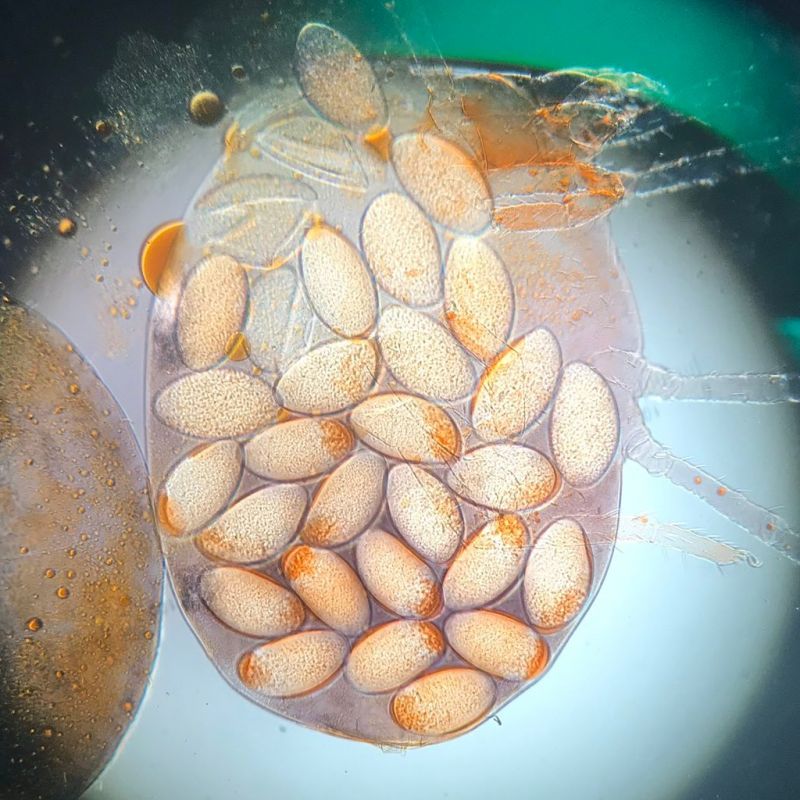
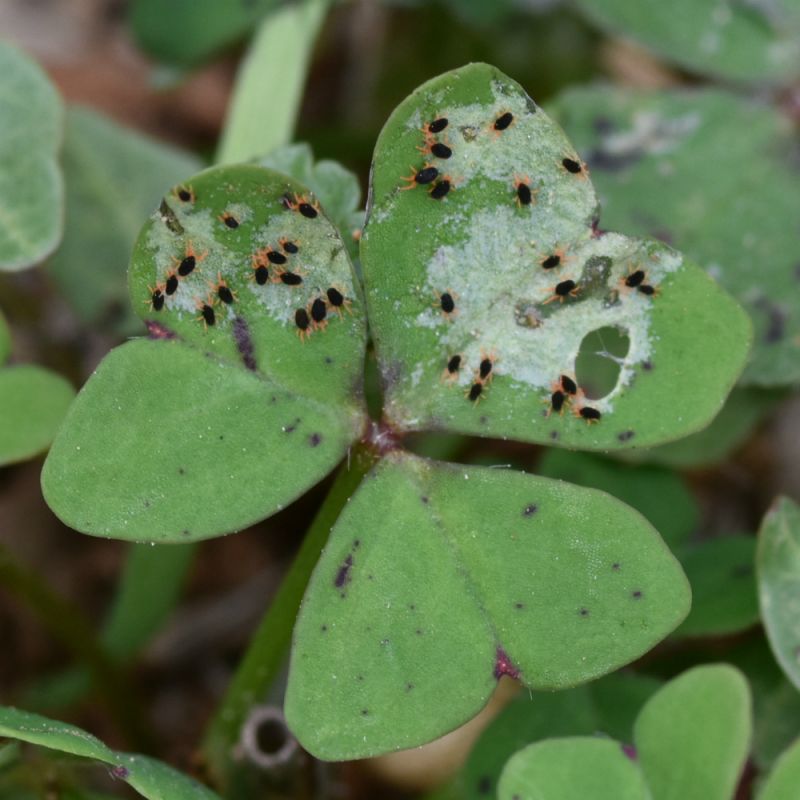
Bryobia mites (clover mites, Bryobia spp.) are present in moderate numbers in the upper South East. Crops are advanced with minimal damage observed.
Bryobia mites are sporadic pests typically active from spring through autumn, although they can be found throughout the year. They are smaller than many other pest mites, with adults reaching up to 0.75 mm in length. Their bodies are oval, dorsally flattened, and may be dark grey, pale orange, or olive, with eight pale red or orange legs.
Bryobia mites resemble redlegged earth mites, Balaustium mites, and blue oat mites but can be distinguished by their prominent forelegs, which are about 1.5 times their body length. They are lighter in colour, smaller, and relatively slow-moving compared to similar species.
Behaviour
Bryobia mites are active during the warmer parts of the day and may be hard to detect during early mornings or in wet conditions. They feed on the upper surfaces of cotyledons and plant leaves.
Most damage occurs in autumn when Bryobia mites attack newly establishing pastures and emerging crops, reducing seedling survival and hindering development. They feed by piercing and sucking material from the upper surfaces of leaves and cotyledons.
Management
Inspect paddocks during early autumn and spring when Bryobia mites are more problematic. Look for mites and feeding damage on newly established crops, clovers, and brassica weeds prior to sowing.
Unlike other mites that spend time on the soil surface, Bryobia mites are found on the leaf surfaces. Use a petrol-powered garden blower/vacuum machine with a fine sieve or stocking over the suction pipe to sample mites effectively. Bryobia mites prefer broadleaf plants like canola, lupins, vetch, lucerne, and clover, but they also attack cereals. In pastures, they favour clovers and medics over grasses.
Regular monitoring and timely intervention during critical periods, such as early autumn and spring, are crucial for effective management of Bryobia mites.
Source of reports: Jake Hull, Nutrien West Coast Ag.
Look out for aphids this spring
Cabbage aphid monitoring and threshold guidelines
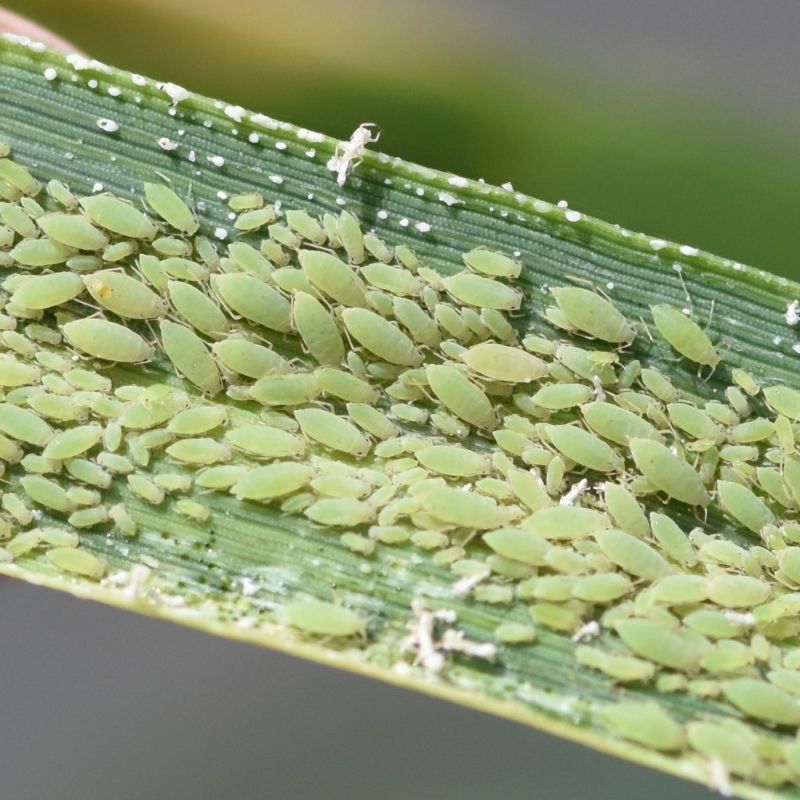
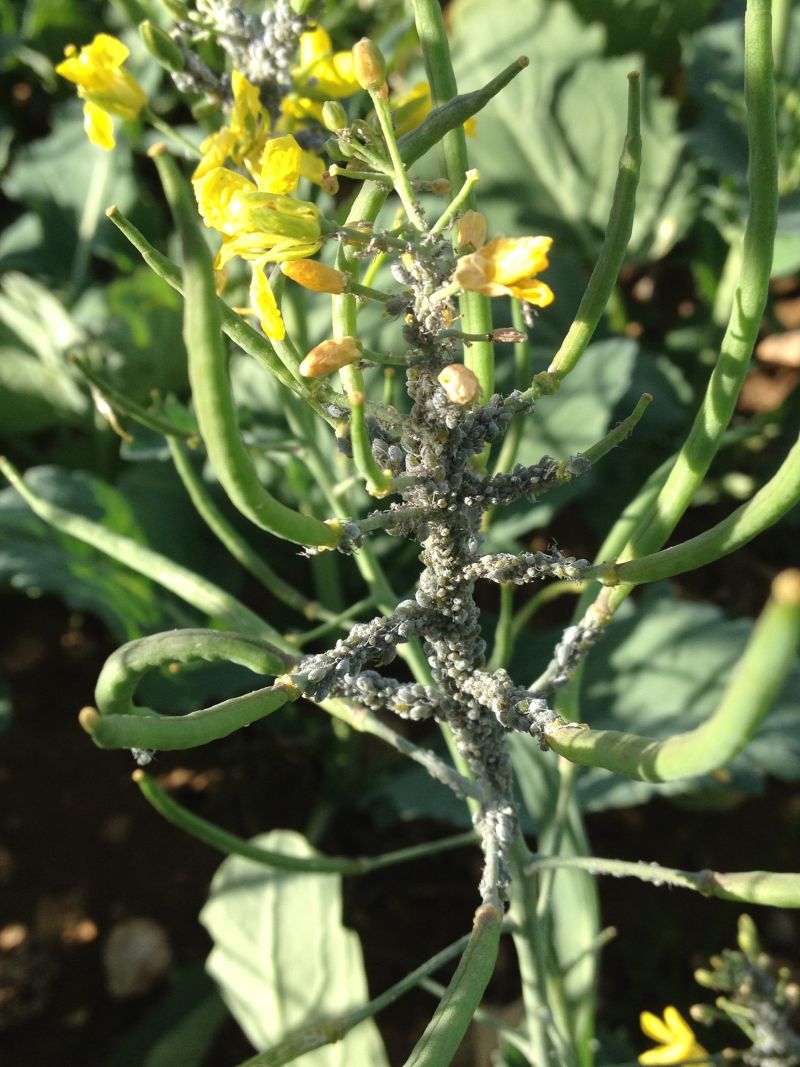
Monitoring for canola aphids should begin in crop edges as these are typically infested first. Inspect at least 20 plants at 5 sampling points over the paddock. Cabbage aphid colonies have a characteristic blue-grey appearance and are normally covered in a thick, whitish powder, whereas turnip aphid (Lipaphis pseudobrasssicae) colonies have a lighter covering of wax and appear green in colour.
Consider control where more than 20% of plants are infested, or more than 10% of plants with 25 millimetres of stem are infested. When determining economic thresholds for aphids, it is critical to consider several other factors before making a decision including:
- current growing conditions
- moisture availability
- populations of natural enemies or beneficials.
Using the Russian wheat aphid threshold calculator
If you are seeing Russian wheat aphid (RWA, Diuraphis noxia) or the typical striping they cause in wheat or barley, use the RWA action threshold calculator to help decide your next steps. The calculator helps decide if spraying is economically justified by considering:
- cost of control
- cereal market price
- aphid numbers.
When using the calculator, monitoring at growth stage 30 (GS30) stem elongation is recommended. Plants at these earlier growth stages will often be able to compensate for RWA, just as they can compensate for grazing or herbicide damage. Economic justification for sprays before GS30 cannot be calculated with available data.
How to monitor for RWA
- At GS30, count the number of tillers in 50 centimetre row lengths, choosing at least 5 areas of the paddock. For example, you may have 433 tillers counted.
- In the same row lengths, count the number of tillers with symptoms. For example, leaf rolls sheltering aphids inside, whitish, yellowish to pink-purple chlorotic streaks along the length of leaves or stunted plants with flattened tillers. If there are 43 tillers with symptoms, you have 10% tillers with symptoms (43/433).
- In or around each of the five areas, check 20 tillers of these with symptoms (100 in total) for the actual presence of RWA. If there are 54 tillers with both symptoms and RWA, then at this stage you have 54% tillers with symptoms that also have RWA.
- Multiply the percentage of tillers with symptoms with the percentage of symptomatic tillers that are hosting RWA. This will result in the percentage of tillers with RWA. In this example, 0.1 × 0.54 = 0.054, meaning 5.4% of tillers with RWA.
More and more caterpillars
Armyworms
There has been a report of armyworm caterpillars in wheat crops in the Mid North around Auburn.
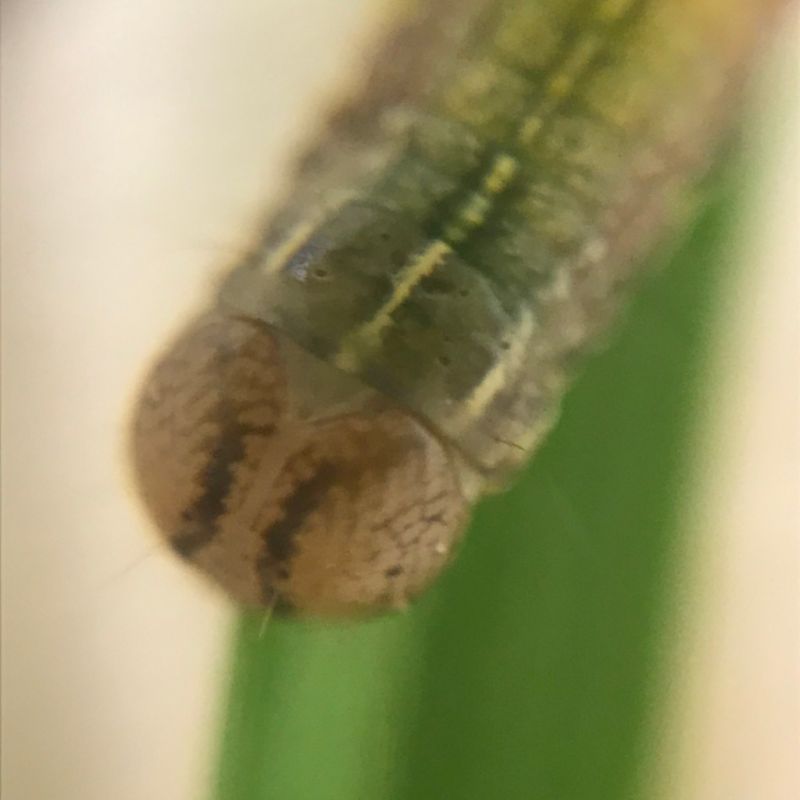
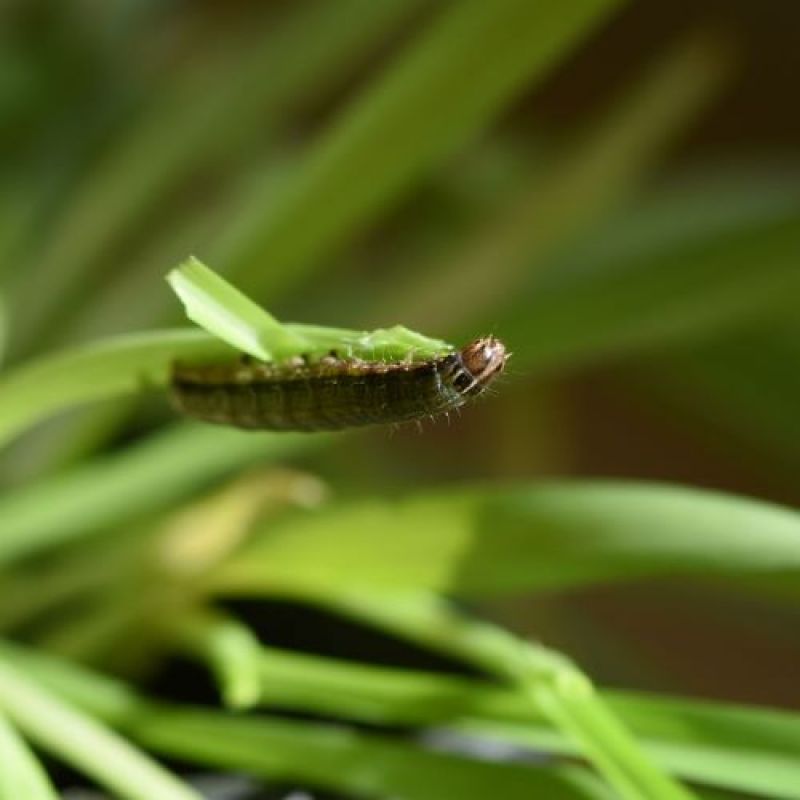
Armyworms can be identified from other caterpillars by the 3 longitudinal stripes from the collar (behind the head) running down the body. They can grow up to 40 millimetres in length. There are 3 main species of armyworm that are broadacre crop pests. They are difficult to tell apart in the field, but their feeding habits and management controls are similar. The best way to get an accurate species identification is to send in a sample with as many individual specimens as possible (we recommend at least 20, but fewer is okay). This is free for PestFacts subscribers, but please follow the instructions for the insect identification service.
Fall armyworm (FAW, Spodoptera frugiperda) has not been detected in South Australia. They have the distinctive 3 stripes but also an inverted Y-shape on the head and a pattern of 4 large raised dark spots on the second to last body segment.
Herringbone caterpillars
Recent reports from northern Eyre Peninsula and Kimba have noted some herringbone caterpillar activity affecting cereals and lentils. The damage is not considered highly critical at this stage.
How to recognise herringbone caterpillars
There is a range of species of caterpillars, broadly known as 'herringbone caterpillars', that can feed on grass pastures, cereals and to a lesser extent, legumes. They were previously known as white-tailed black cutworms. They do not cause the head-lopping damage that is sometimes associated with armyworm but the two often coexist.
Herringbone caterpillar larvae usually display a light or dark band along the upper abdomen, with a characteristic herringbone or chevron-like pattern of diagonal pale markings on either side of this on many of the abdominal segments. Colouration patterns are more obvious in larger larvae, while smaller larvae are more uniformly dark.
Feeding habits
Most herringbone caterpillar feeding results in a low to moderate economic impact and occurs in late autumn and winter. Larvae most often feed on the lower parts of plants. Damage can be of greater significance in later sown crops that are less advanced.
Management
Regularly inspect crops for signs of caterpillar activity, especially during late autumn and winter. Early detection helps to implement timely control measures. Only spray if severe defoliation is occurring. There is only one generation of this caterpillar each year and they will no longer be a problem once pupated.
Source of reports: Michael Nash, Kevin Dart (Ep Ag N’ Fert)
Using SARDI's Etiella model
The SARDI Etiella degree-day model predicts the timing of initial spring Etiella (lucerne seed web moth) flight activity using local daily maximum and minimum temperatures from 21 June onwards.
A 'degree-day' is when maximum and minimum temperatures are in a range conducive for the Etiella lifecycle.
Current degree-day accumulations (to 30 August) in many regions are still below the 300 degree days used to indicate when monitoring should start:
| Location | Degree-days |
|---|---|
| Roseworthy | 197 |
| Cummins | 232 |
| Cleve | 232 |
| Port Pirie | 297 |
| Keith | 228 |
| Horsham (Vic.) | 183 |
When the model reaches 351 degree-days this corresponds to the expected start of moth flight activity. We recommend starting in-crop monitoring of lentil crops around 7 to 10 days earlier than this date, at around 300 degree day accumulations.
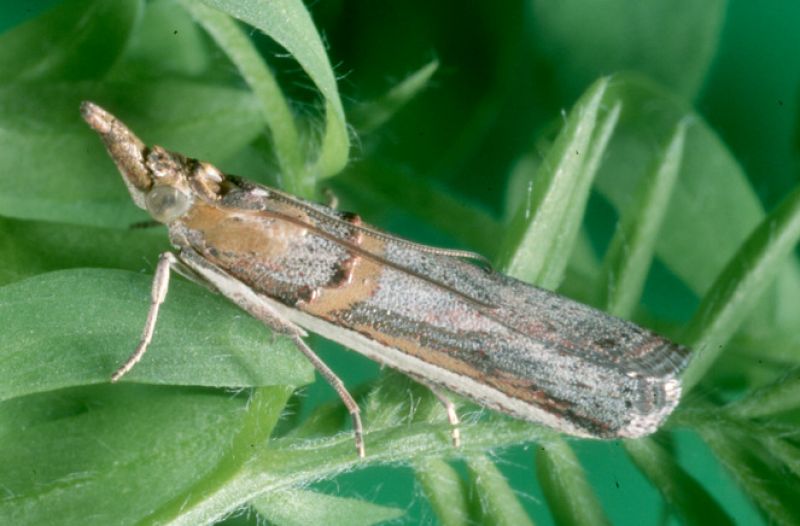
How to recognise Etiella moths
- 10 to 15 millimetres long.
- Greyish-brown in colour with a pale white stripe running along the front edge of the forewings.
- Prominent 'beak' protruding forward from the head.
- Lay eggs on the calyx. Eggs are clear in colour and change to orange prior to hatching.
Monitoring for Etiella moths
Use a sweep net and take samples of 20 sweeps in at least 5 locations. If moth numbers exceed threshold guidelines of 1 to 2 moths per 20 sweeps, consider immediate treatment with a registered insecticide. Start monitoring again 7 to 10 days after treatment.
Report to PestFacts
The PestFacts SA team always wants to know what invertebrates you find in your crops and pastures, whether it is a pest, beneficial or unknown – even the usual pests.
Please send your reports or identification requests via the PestFacts map.
Alternatively, please contact:
Maryam Ehsangar
Phone: 0448 010 339
Email: maryam.ehsangar@sa.gov.au
Maarten van Helden:
Phone: 0481 544 429
Email: maarten.vanhelden@sa.gov.au
Subscribe
The latest information for growers and advisors on the activity and management of pests in all broadacre crops during the winter growing season.