

PestFacts 9 October 2024
Beneficial insects in the field – ladybird beetles
Beneficial insects are important for sustainable farming as they help with pollination and controlling pests. As spring arrives, we're already seeing parasitoid wasps, lacewings, ladybugs, and other pest predators.
By managing these helpful insects, growers may be able to use fewer pesticides, leading to healthier crops.
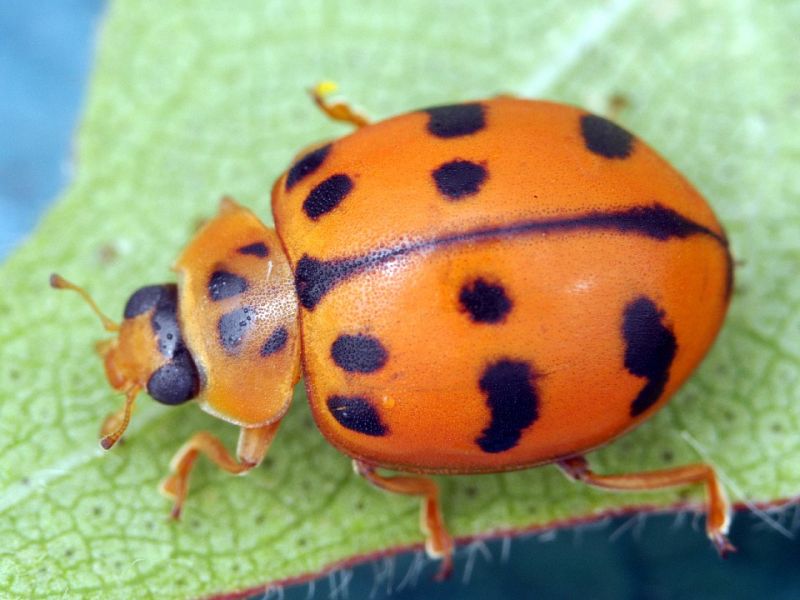
Adult ladybird beetles are one of the most easily recognisable natural enemies in cropping systems. Larval ladybird beetles look very different to adult ladybirds. They vary in colour, but are typically black, grey or brown, lacking the wings, spots and the vibrant red colour associated with adult ladybugs. Instead, their appearance includes an elongated, segmented body covered in tiny spines.
Both adults and larvae are voracious predators, and can have a considerable impact on pest populations, particularly aphids. Ladybirds will consume more aphids as temperatures increase in spring and summer and populations increase.
In laboratory studies, adult common spotted ladybeetles (Harmonia conformis) attack more green peach aphids (Myzus persicae) and are quicker to consume each aphid (their handling time decreases) as temperatures increase from 10°C to 32°C. Their optimum temperature is 32°C when they can consume over 200 aphids in a day.
Ladybirds are also very smart and can move around the canola field to identify aphid patches. Adult females will often identify clusters of aphids in the canola crop, consume some, but then lay their eggs right next to those left behind. This is strategic so that when the eggs hatch, the immatures have a nearby source of food. Ladybirds are generalists and consume many types of prey. They often learn from their experiences in the field to focus their search on the most densely populated prey.
We can't yet say how many ladybirds you need in your canola field to achieve good levels of pest control, but it's a good thing to see adults moving and searching for aphid patches, eggs laid near aphid clusters, and maybe immatures crawling around on the crop.
Get to know your beneficials
Knowing about the different beneficial insects on your farm and how they can help is crucial for effective pest control.
The GRDC-funded project Canola Allies aims to empower growers with greater knowledge of their natural pest enemies in canola fields. This project focuses on enabling growers to manage beneficial insects in a proactive manner before, during, and after the growing season.
Diamondback moth
Recent observations indicate varying levels of diamondback moth (DBM or cabbage moth) activity across regions. Lower Eyre Peninsula has seen a reasonable number of crops treated for DBM, while other regions report much lower numbers, with only 1 to 5 DBM detected per 10 sweeps.
Very dry autumn conditions may have diminished the green bridge which typically supports starting populations. However, mild, dry winters can significantly boost diamondback moth populations, enabling them to thrive and become more noticeable. This combination of factors can lead to a marked increase in diamondback moth visibility and prevalence.
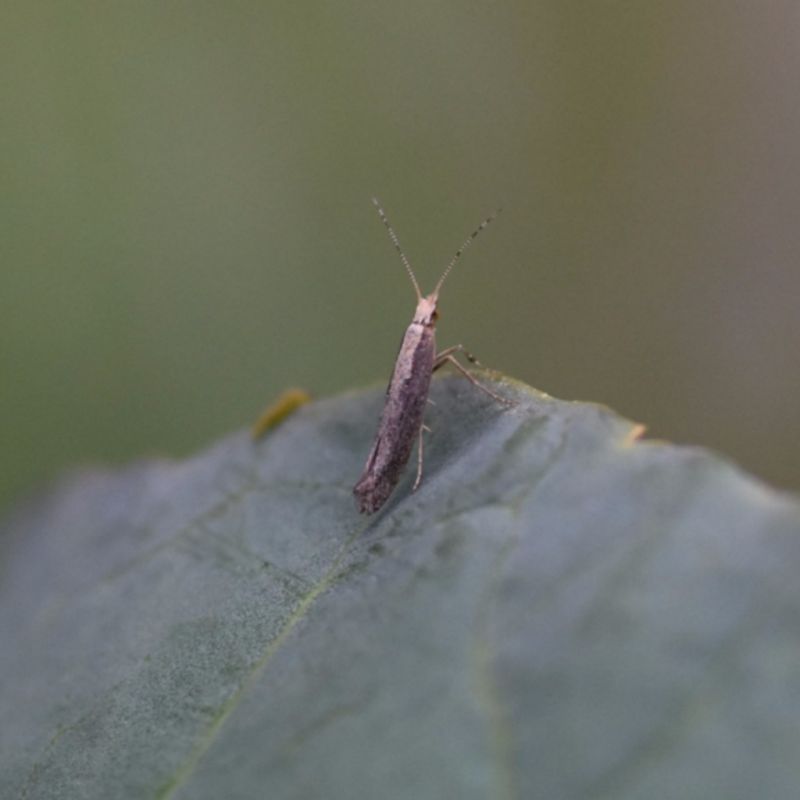
Adult DBM are 10 millimetres long and grey–brown in colour with a white uneven stripe down the centre of their back. When the moths are at rest, this uneven shape forms a 'diamond' pattern on their wings. They have beak-like mouth parts. The caterpillars are pale yellowish green in colour, can grow up to 10 millimetres in length and have a body shape that is slightly tapered at each end. The second and third instar larvae have a dark head. They will wriggle very fast when manipulated. Pupae are a cream-green colour, which darkens before the adult moth emerges.
- Small larvae feed on leaves, often concentrated on the underside, resulting in small holes.
- Older larvae graze on stems and pods.
- As flowering progresses, increasing numbers of larvae move to the floral buds, flowers and pods.
- Larvae may feed on small young pods while mature pods are usually only surface grazed.
Heavy infestations can cause severe defoliation, which can reduce crop yields but older canola can tolerate considerable foliar feeding damage without impacting yield.
- Canola should be monitored from late winter to late spring or early summer.
- Search for the presence of larvae on leaves, buds and flowers, especially during flowering and podding.
- Sample crops by sweep netting. If no diamondback moth is detected the crop should be monitored again in a fortnight.
Additionally, consider the role of parasitoids in pest management. Parasitoids, such as the wasp Diadegma semiclausum, can help control diamondback moth populations by laying their eggs in or on the larvae. These beneficial insects can provide natural pest suppression, so encourage their presence in the field. Regular monitoring of both pests and beneficial insects will help maintain a balanced ecosystem in your crop.
Economic thresholds for diamondback moth
Take a minimum of 5 sets of 10 sweeps in several parts of the crop and calculate the average number of the larvae per 10 sweeps.
- More than 10 larvae per 10 sweeps for pre-early flowering
- More than 50 larvae per 10 sweeps for early-mid flowering through to pod formation
- More than 100 larvae per 10 sweeps for late flowering through to podding.
More caterpillar reports
- Recent observations indicate that common armyworms have reached damaging levels in barley crops in the Mid North.
- Reports from Stockport highlight the presence of these armyworms on wheat crops.
- Corn earworms (Helicoverpa armigera) have been detected in legume crops in Strathalbyn.
How to identify armyworm
Armyworms are common caterpillar pests that primarily affect grass pastures, cereals, and rice crops.
Three species of armyworm are common in southern Australia (other regions have different species):
- Southern and inland armyworms (Persectania species) are more typically found during autumn and winter, but their activity can sometimes spread into spring.
- Common armyworm (Leucania convecta) can potentially be seen year-round, but particularly in spring.
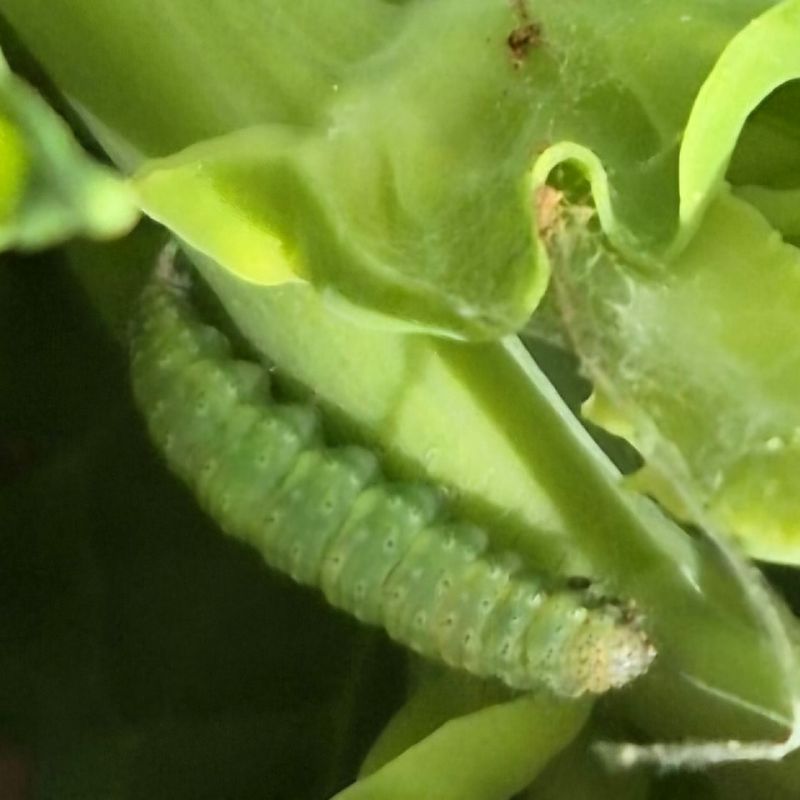
Armyworm larvae start at approximately 1 millimetre after hatching and can grow up to 40 millimetres in length. They are identifiable by three parallel white stripes along their smooth, slightly hairy bodies. Larvae typically feed on crops, causing damage. In extreme cases of food scarcity, they may 'march' in large groups to find new sources of food.
The adult moths are grey–brown and have a stout body with a wingspan of about 40 to 45 millimetres.
Armyworm caterpillars can be confused with:
- native budworm which has more prominent body hairs
- cutworms have absent or indistinct stripes
- herringbone caterpillars which have herringbone-like markings on the stripes down the body.
The exotic fall armyworm (FAW, Spodoptera frugiperda) is not present in SA but looks similar to other native armyworms with the typical three stripes. If you suspect a caterpillar is FAW, please contact the Emergency Plant Pest hotline 1800 084 881 or submit a plant pest report.
How to identify corn earworm
The corn earworm (Helicoverpa armigera) is more common in the warmer northern or coastal regions of eastern Australia.
Adult moths have a wingspan of 30 to 45 millimetres with light to red-brown colouring and dark spots. Their hindwings are pale with a dark band.
Larvae reach up to 40 millimetres, showing colour variations from brown to green and orange, marked by dark strips and bumpy skin with stiff hairs. They have a distinctive 'saddle' on the fourth segment and downward-angled rears.
They attack the above-ground parts of mature plants, including pods and seeds, with most damage occurring in cereals, rice, and pastures in late spring and summer. They are especially harmful to the fruiting parts of plants, causing visible holes and chewing damage.
Corn earworm moths are less likely to fly long distances compared to native budworm moths. This means that problems in spring and summer usually come from local populations that survive the winter as pupae in crops.
Monitor crops for activity by taking a minimum of 5 sets of 10 sweeps and calculating the average number of larvae per 10 sweeps. The use of pheromone traps (which attract male moths) can provide an early warning of moth arrival to an area or their emergence from local winter diapause.
Native budworm update
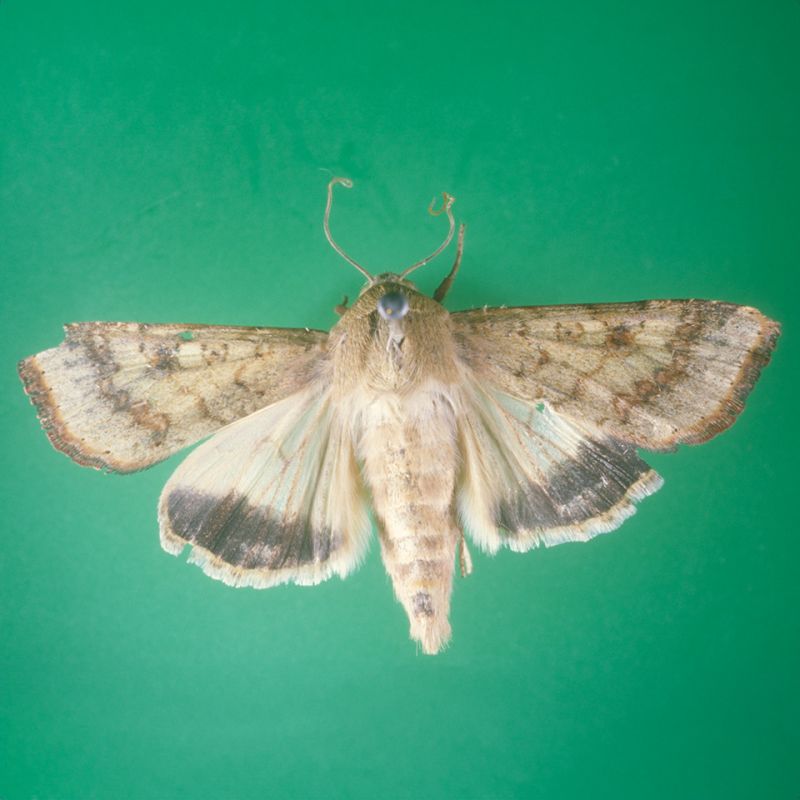
Over the last month, native budworm (Helicoverpa punctigeria) has been reported at Frances, Kimba, Port Broughton and Cummins. Current budworm trapping has detected flights over the past week on the Mid North and has seen low numbers (50 moths) on Eyre Peninsula.
Identifying native budworm
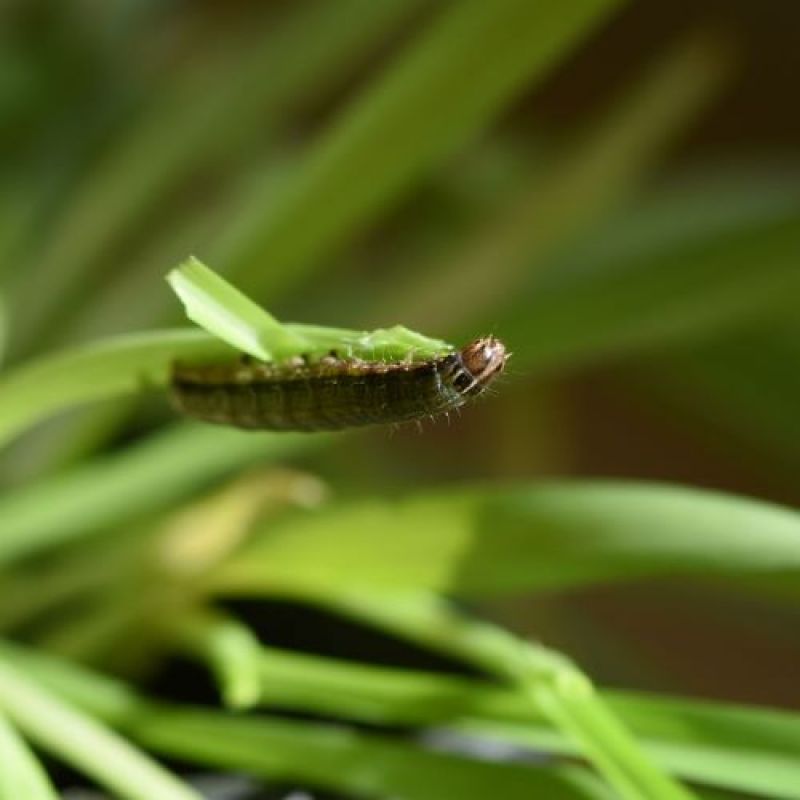
Native budworm caterpillars can vary substantially in colour that includes shades of brown, green and orange. They usually have darkish stripes along the body and bumpy skin with sparse, stiff, stout hairs. They grow up to 40 millimetres in length, with a sharp downward angling in the last segment of the body.
Similar caterpillars include the corn earworm (H. armigera) and lesser budworm (Heliothis punctifera).
Native budworm can be recognised by the black hairs around the head and along the body, compared to the white hairs around the head on both corn earworm and lesser budworm.
Etiella reports
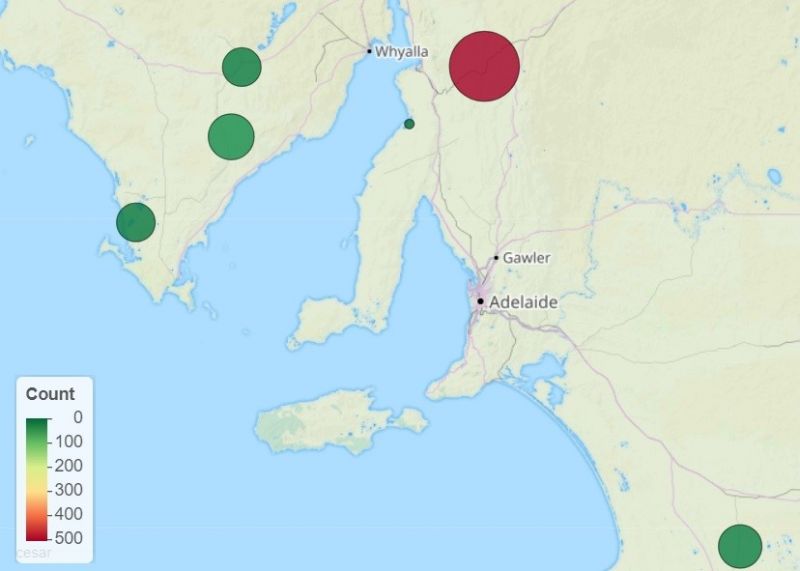
In recent weeks, Etiella has been reported in several locations across South Australia, notably in lentil crops on the west coast of the Eyre Peninsula and in the Mid North.
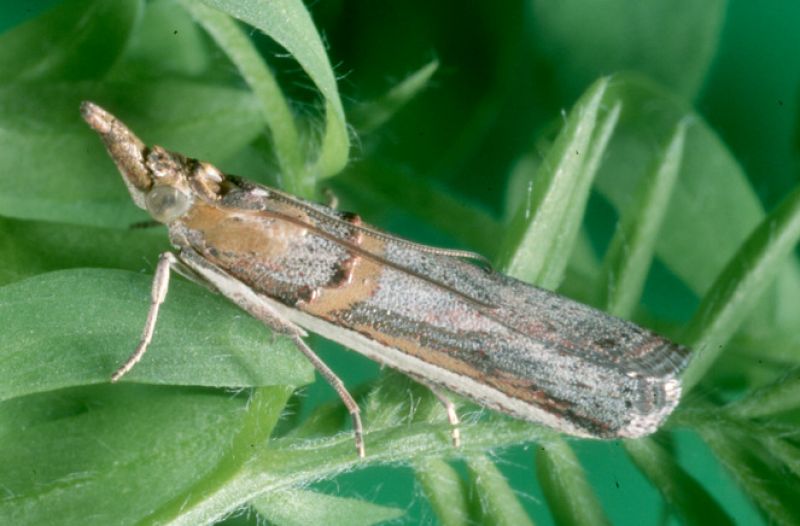
How to recognise Etiella moths
- 10 to 15 millimetres long
- Greyish brown in colour with a pale white stripe running along the front edge of the forewings
- Prominent 'beak' protruding forward from the head
- Lay eggs on the calyx – eggs are clear in colour and change to orange prior to hatching.
Monitoring for Etiella moths
- Use a sweep net and take samples of 20 sweeps in at least 5 locations.
- If moth numbers exceed threshold guidelines of 1 to 2 moths per 20 sweeps, consider immediate treatment with a registered insecticide.
- Start monitoring again 7 to 10 days after treatment.
Using SARDI's Etiella model
The SARDI Etiella degree-day model predicts the timing of initial spring Etiella (lucerne seed web moth) flight activity using local daily maximum and minimum temperatures from 21 June onwards.
The date when the model reaches 351 degree-day accumulations corresponds to the predicted date of 10% onset of peak moth flight activity. We recommend starting in-crop monitoring of lentil crops around 7 to 10 days earlier than this date, at around 300 degree-day accumulations.
Current model predictions for degree-day accumulations (to 30 September) in many regions are above 300 degree-days which indicate monitor now in flowering or podding lentils.
| Location | Degree-days |
|---|---|
| Roseworthy | 351 |
| Cummins | 351 |
| Cleve | 351 |
| Port Pirie | 351 |
| Keith | 351 |
| Horsham (Vic.) | 331 |
Cowpea aphid reports
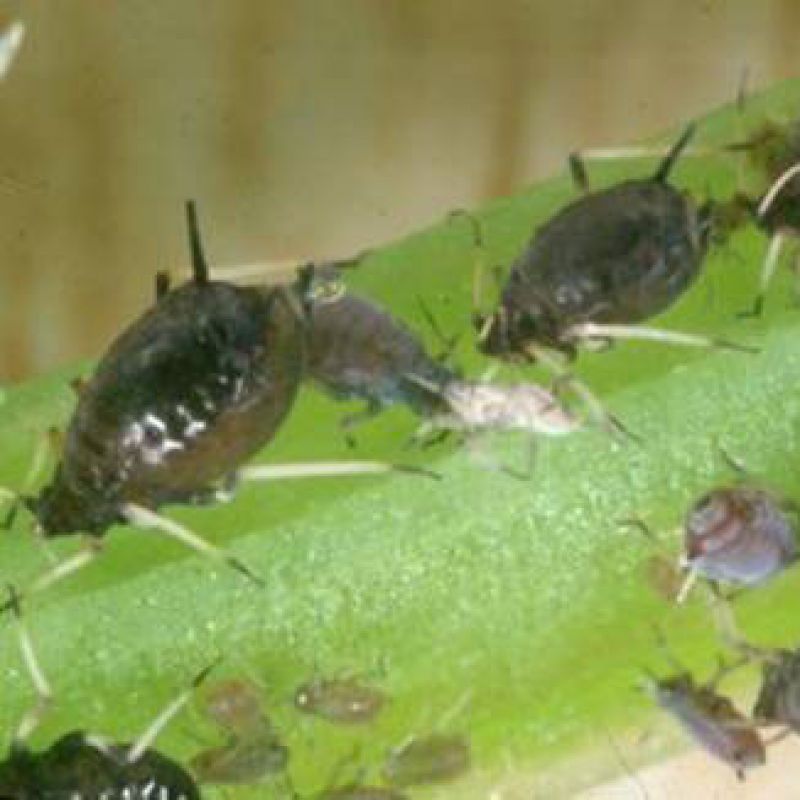
Cowpea aphids (Aphis craccivora) have been reported on legumes in the Mid North and on faba beans in the South East.
Identifying cowpea aphid
Adult cowpea aphids are shiny black in colour and nymphs are dull grey as they are lightly dusted with wax. All have white and black legs. Cowpea aphids can reach up to 2 millimetres in length.
Cowpea aphids tend to colonise single plants before moving onto surrounding plants to create 'hot spots' within a crop.
Cowpea aphid management
Cowpea aphids are most prominent in spring but are also active during autumn and can persist through winter. The key time to monitor vulnerable crops is during bud formation to late flowering.
There are many effective natural enemies of aphids, including ladybird beetles, hoverflies, damsel bugs, lacewings and parasitoid wasps. Naturally occurring aphid fungal diseases can also suppress aphid populations.
When monitoring for aphids, keep an eye on the beneficials as they play a very important role in suppression. If levels of parasitism and predation are increasing over time, it is likely that aphid populations will be controlled naturally.
If chemical control is warranted check the Australian Pesticides and Veterinary Medicines Authority's Public chemical registration information system search for chemical options. Spot spraying may be sufficient. Try to avoid the use of broad-spectrum insurance sprays and apply insecticides only after monitoring and distinguishing between aphid species.
When checking pulse crops, look for large green aphids with bright red eyes. These aphids are present in Victoria and New South Wales but have not been reported in SA. Please let us know if you find them!
Report to PestFacts
The PestFacts SA team always wants to know what invertebrates you find in your crops and pastures, whether it is a pest, beneficial or unknown – even the usual pests.
Please send your reports or identification requests via the PestFacts map.
Alternatively, please contact:
Maryam Ehsangar
Phone: 0448 010 339
Email: maryam.ehsangar@sa.gov.au
Maarten van Helden:
Phone: 0481 544 429
Email: maarten.vanhelden@sa.gov.au
Subscribe
The latest information for growers and advisors on the activity and management of pests in all broadacre crops during the winter growing season.