

PestFacts 5 November 2024
Predicting next year's insect pests
Finding invertebrates such as snails, slugs, European earwigs, weevils and vegetable beetles during harvest can inform monitoring for next season.
Resident pests can live in paddocks and build up high populations over several years if conditions are favourable. Knowing the hot spots or paddocks with these pests allows you make informed plans for next autumn:
- where to monitor
- crop choices
- possible cultural controls.
Take note of what you’re finding in paddocks this harvest so you know what to look out for next season.
Reducing numbers during harvest
Some tips and tricks on how to stop the spread of resident pests and how to reduce numbers during harvest include:
- Clean your machinery before moving from one paddock to the next to minimise the risk of introducing pests into new areas. As cleaning machinery is time consuming and won’t remove all snails, consider harvesting paddocks with snails last.
- Don’t harvest at night where there are known populations of nocturnal invertebrate pests such as European earwigs and black Portuguese millipedes as it increases risk of these pests being harvested alongside the grain.
- Check grain from swathed crops, as these tend to have more insect contaminants than grain from direct harvested crops. Invertebrates such as European earwigs and bronzed field beetle tend to congregate under crop swaths rather than in standing crops. The less delay there is between swathing and harvest, the fewer vagrant invertebrates are harvested with the grain.
- Check your chaff lines for invertebrate pests as they provide shelter and habitat.
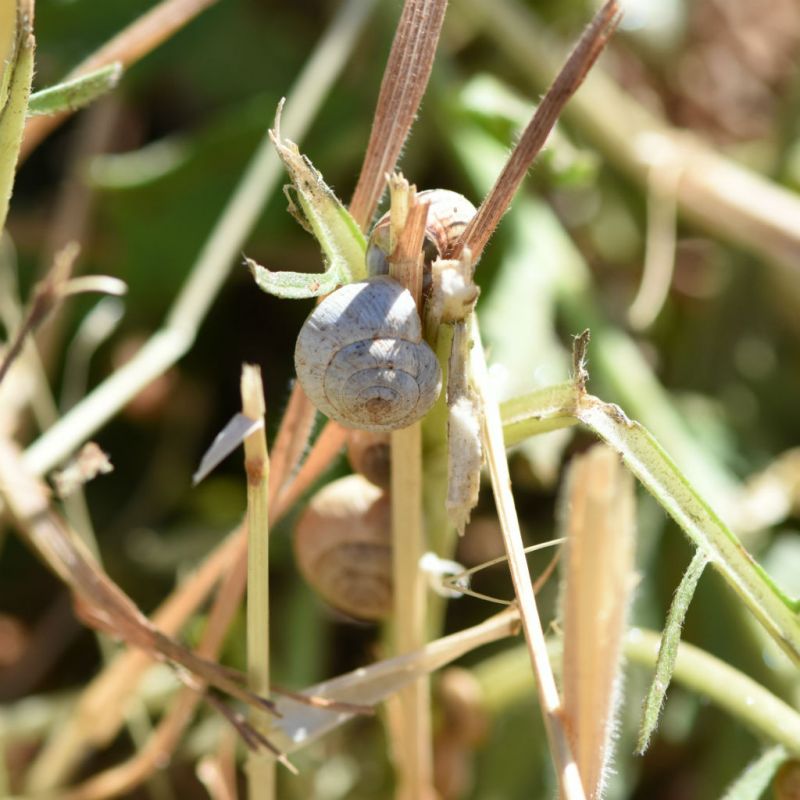
- If you have snails in the paddock, use a stripper front during harvest to reduce snail contamination as these fronts vibrate snails off standing cereals and take in less material.
Nail the snails
Effective snail management involves a year-round strategy. In spring, growers should determine if snails could be a problem during harvest and then implement strategies to deliver clean grain as well as starting to control snail numbers for next season. For spring management read Paddock Practices: Tips and tools for reducing snails at harvest.
Summer weed control
Reducing summer weeds is an important tactic for reducing numbers of many resident pest species, especially snails. However, this should be done before using other cultural controls which may be less effective when summer weeds are present.
Weed control should also occur in late autumn before baiting to reduce alternative food sources for snails.
Rolling, cabling and slashing
These tactics flatten stubble to reduce vertical refuges and knock snails onto the soil surface where many will dehydrate. It also can crush snails.
Stubble bashing is most effective on hot sunny days with maximum temperatures above 35°C (ideally 40°C, when ground temperature is about 55°C), followed by more hot days. Always consider and manage fire risks. Repeat operations may be more effective in coastal areas with milder temperatures.
Grazing also flattens stubble, crushes snails and assists with weed control, and can be implemented any time between spring and autumn.
Baiting
To maximise baiting efficacy, select a suitable bait product from the product selection guide, apply bait at the optimal time, ensure sufficient bait points by re-applying, broadcast pellets evenly with a calibrated spreader, and avoid application during very hot or wet weather. Additionally, the effectiveness of metaldehyde baits is affected by temperature, as they degrade in conditions above 40°C. It's recommended to store bait pellets in cool conditions over summer and avoid hot sheds.
More information

Beneficial insects in the field – hoverflies
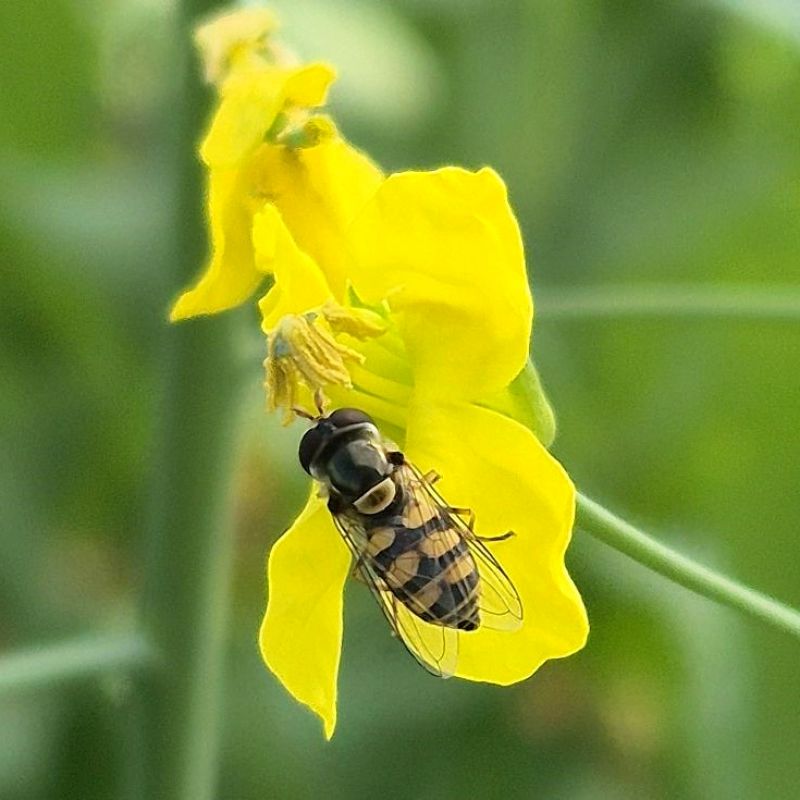
With a warm start to spring, beneficial insects like hoverflies have become increasingly active. These insects, often mistaken for wasps or bees due to their appearance, play a crucial role in pest management. Hoverflies, also known as flower flies, thrive in warm weather, hovering around flowering crops and seeking out areas with available pollen for adults to feed on. Their larvae primarily target aphids but can also prey on a variety of soft-bodied insects, including caterpillars and mealybugs.
Hoverflies range in size from 8 to 20 mm and are characterised by their slender bodies, large heads, and prominent eyes. They have a pair of clear wings and inconspicuous antennae, displaying striking yellow and black banding that mimics warning colouration. Their body shape is notably defined by a narrow waist. While the larvae can be challenging to spot due to their flattened, legless, maggot-like appearance, they typically come in green or brown hues that help them blend into foliage while they search for aphids.
Some hoverfly species, such as Eristalis, lay their eggs in stagnant water, resulting in aquatic larvae known as rat-tailed maggots and which possess a long, thin breathing tube. Hoverflies show a preference for yellow and white flowers, especially those with open centres that facilitate easy access to pollen. To support hoverfly populations, it's beneficial to maintain non-crop plants in and around agricultural fields, providing essential food sources of pollen and nectar for adult hoverflies.
By nurturing hoverfly populations, farmers and gardeners can promote natural pest management while supporting the pollination process, ultimately leading to more sustainable agricultural practices.

Recent reports
European earwig activity in crops
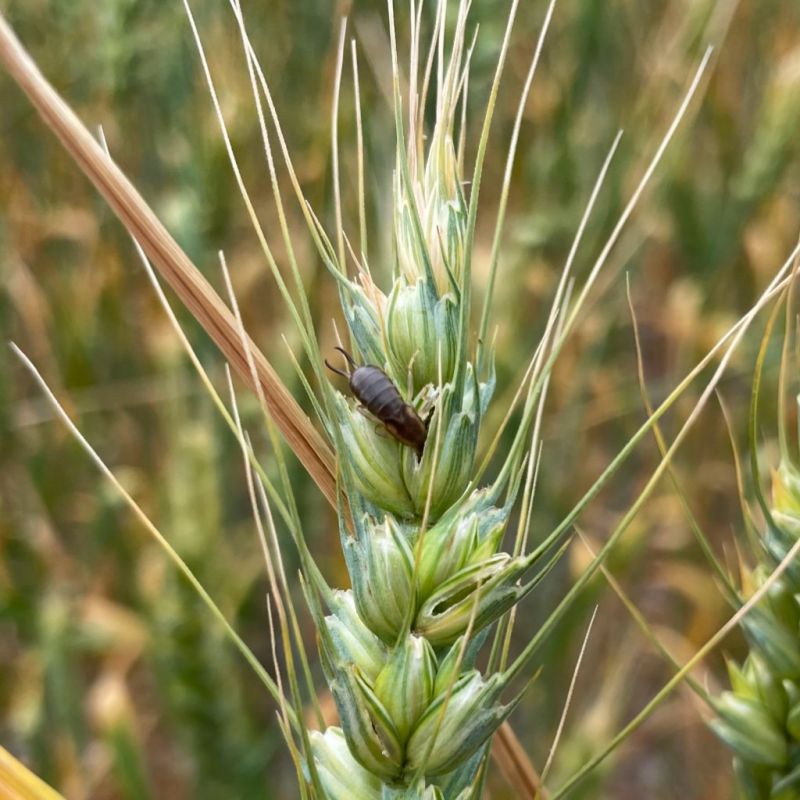
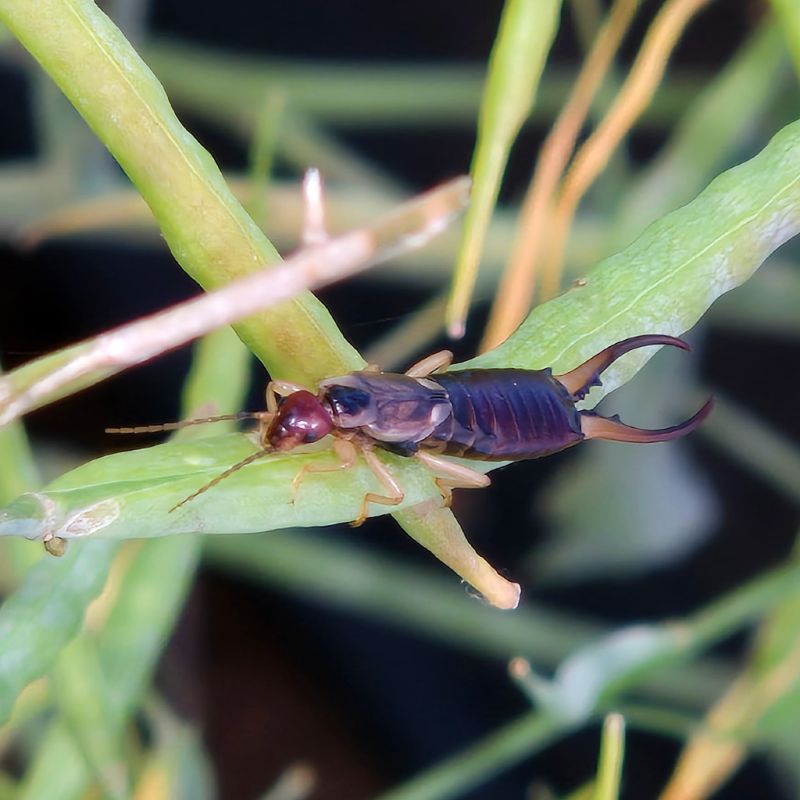
Reports indicate a significant increase in European earwigs (Forficula auricularia) on wheat crops in the southeast and on canola crops in the north. There are concerns about potential contamination during the upcoming harvest, raising the risk of rejected loads that may require cleaning, as seen in previous years.
Earwigs can be beneficial at this stage of the year as they should be eating mostly pest insects such as aphids, rather than (mostly) seedling leaves.
Avoiding grain contamination
Earwigs are nocturnal and seek shelter during the day, making daytime harvesting more effective. Trials have shown that earwigs tend to shelter under swathed (windrowed) crops rather than in standing crops. Therefore, harvesting during the heat of the day is ideal for both standing and swathed crops, as earwigs will typically remain on the soil surface.
When swathing crops, it's important to maintain the correct swath height to keep them above the ground. If the swaths are too low or resting on the ground, earwigs are more likely to be included in the grain, especially when using crop lifters instead of a belt pickup front. Harvesting swaths during the heat of the day can minimise the number of vagrant earwigs found in the grain, making it comparable to that of standing crops.
Source of reports: Adam Hancock (Elders), Maryam Ehsangar (SARDI)
More caper white butterflies this year
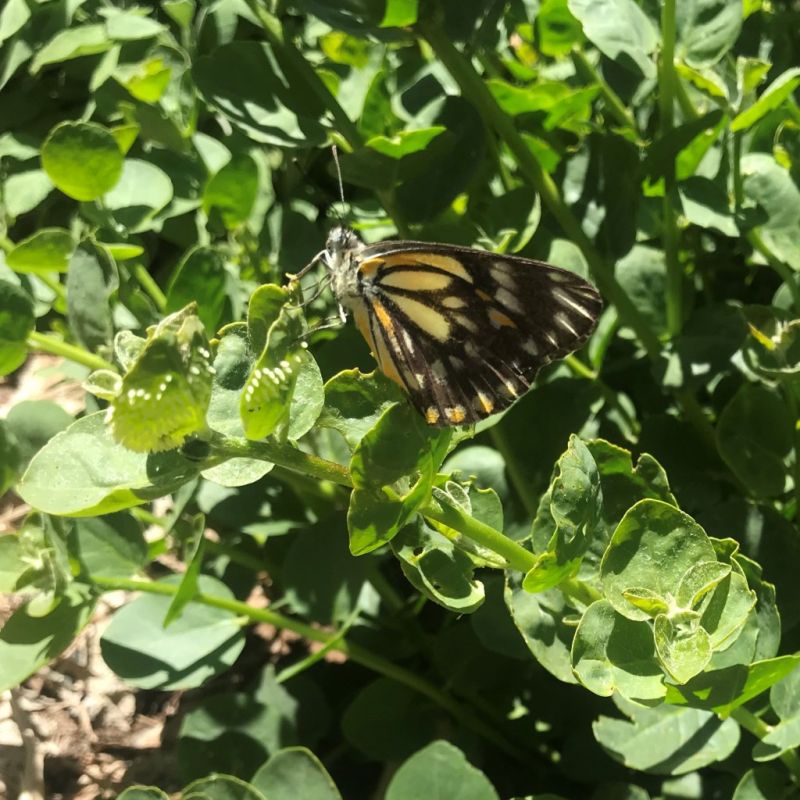
Caper white butterflies (Belenois java teutonia) have been reported in the past few weeks in large numbers around Adelaide.
This year, the drier winter weather led to an increased sighting of caper whites in spring. They are a native Australian species that breed in arid areas on plants of the Capparace family, most notably on caper bushes (Capparis spp.). They are highly migratory, and during spring typically journey south from northern breeding grounds, helped by hot northerly winds. They can persist all year round where domesticated caper bushes (Capparis spinosa) grow in home gardens or orchards, but SARDI Entomologists have noted that beneficials play a large part in regulating numbers.
Caper whites are distinguished from cabbage whites by the black margins on their wings, and yellow-orange markings on the underside. The dark margins are more obvious in female caper whites. Butterfly Conservation SA have a free online identification tool.
Source of reports: Rebecca Hamdorf, SARDI Entomology.
Report to PestFacts
The PestFacts SA team always wants to know what invertebrates you find in your crops and pastures, whether it is a pest, beneficial or unknown – even the usual pests.
Please send your reports or identification requests via the PestFacts map.
Alternatively, please contact:
Maryam Ehsangar
Phone: 0448 010 339
Email: maryam.ehsangar@sa.gov.au
Maarten van Helden:
Phone: 0481 544 429
Email: maarten.vanhelden@sa.gov.au
Subscribe
The latest information for growers and advisors on the activity and management of pests in all broadacre crops during the winter growing season.