
Access is key to reducing Riverland fruit fly detections
Wednesday 8 October 2025 BiosecurityFruit flyMedia release
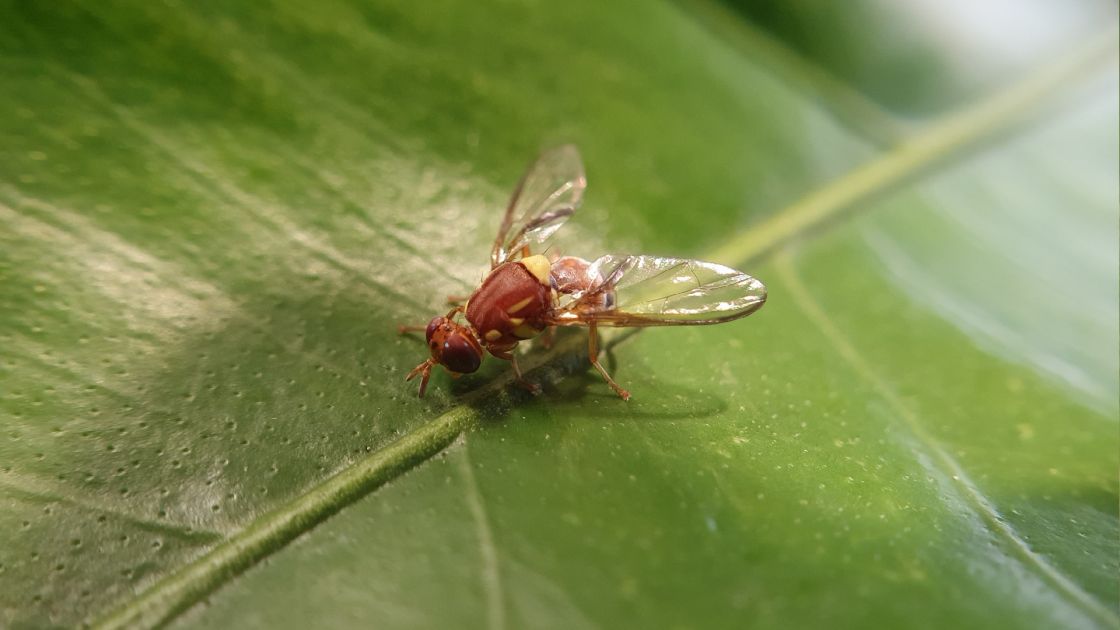
The Department of Primary Industries and Regions (PIRSA) says that access to a small number of Riverland properties in detection hotspots could be the key to reducing fruit fly populations and protecting the region’s horticulture industry.
Staff from PIRSA’s Fruit Fly Response Program visit up to 4,000 properties each month across outbreak areas.
However, they experience continued restricted or partial access to a small number of those properties – and this is often where detections are at their highest.
Additionally, there’s a higher percentage of ‘no access’ properties in Renmark, Cooltong and Chaffey.
PIRSA’s Fruit Fly Response Program General Manager, Jason Size, said the link between obstacles to property access, and increased fruit fly detections, is clear.
“The highest fruit fly activity is in the areas where we have restricted access,” Mr Size said.
“Gaining access to these properties to complete our work is key to reducing detections.”
PIRSA is working closely with the community, and progress can be seen in the Riverland’s fight against Queensland fruit fly (Qfly).
Field teams often develop flexible arrangements in partnership with residents where access was previously not achievable.
As a result, the community has enabled a 62% reduction in access issues in just 3 months.
“We’re really pleased with the progress we’re making in accessing properties, and our preference is always to work directly with residents – not to take formal action,” Mr Size said.
“If we leave a card or letter requesting access to your garden, please call the Fruit Fly Hotline on 1300 666 010 to arrange a time for us to visit.”
Field teams are assigned different roles during garden visits, such as checking for signs of fruit fly, hanging traps, applying organic bait, removing fallen or infested fruit, or carrying out hygiene checks.
These on-ground eradication efforts are supported with weekly sterile fly releases by plane, which help reduce fruit fly numbers and prevent new detections.
Releases are currently scheduled over Chaffey, Cooltong, Crescent, Paringa, and Renmark until January 2026.
“We’re using every tool at our disposal to fight fruit fly in the Riverland, and the ongoing support of the community is essential to making it work,” Mr Size said.
Detections and outbreak end dates
Below is a summary of the detections of fruit fly for the 12-week period from 14 July to 6 October 2025:
- No flies were detected in 31 of the 57 Riverland outbreak areas.
- Flies were detected in 26 of the 57 Riverland outbreak areas.
The end dates for all outbreaks are as follows:
- Riverland: 30 December 2025
- Ceduna: 11 November 2025
- Glynde: 20 December 2025
- Salisbury North: 6 December 2025
See the outbreak map for the latest movement restrictions.
Contact
For more information about fruit fly, self-baiting, or the latest outbreak advice, visit fruitfly.sa.gov.au or call the 24-Hour Fruit Fly Hotline on 1300 666 010.
PIRSA Family and Business (FaB) mentors are available to support Riverland residents through this challenging time. FaB mentors are available for a free, informal, confidential, and independent conversation in person or over the phone.
Riverland and Murraylands FaB mentors include:
- Robyn Cain 0411 633 085
- John Chase 0419 848 672
- Brent Fletcher 0439 409 430
- Shelley Rose 0422 420 323